
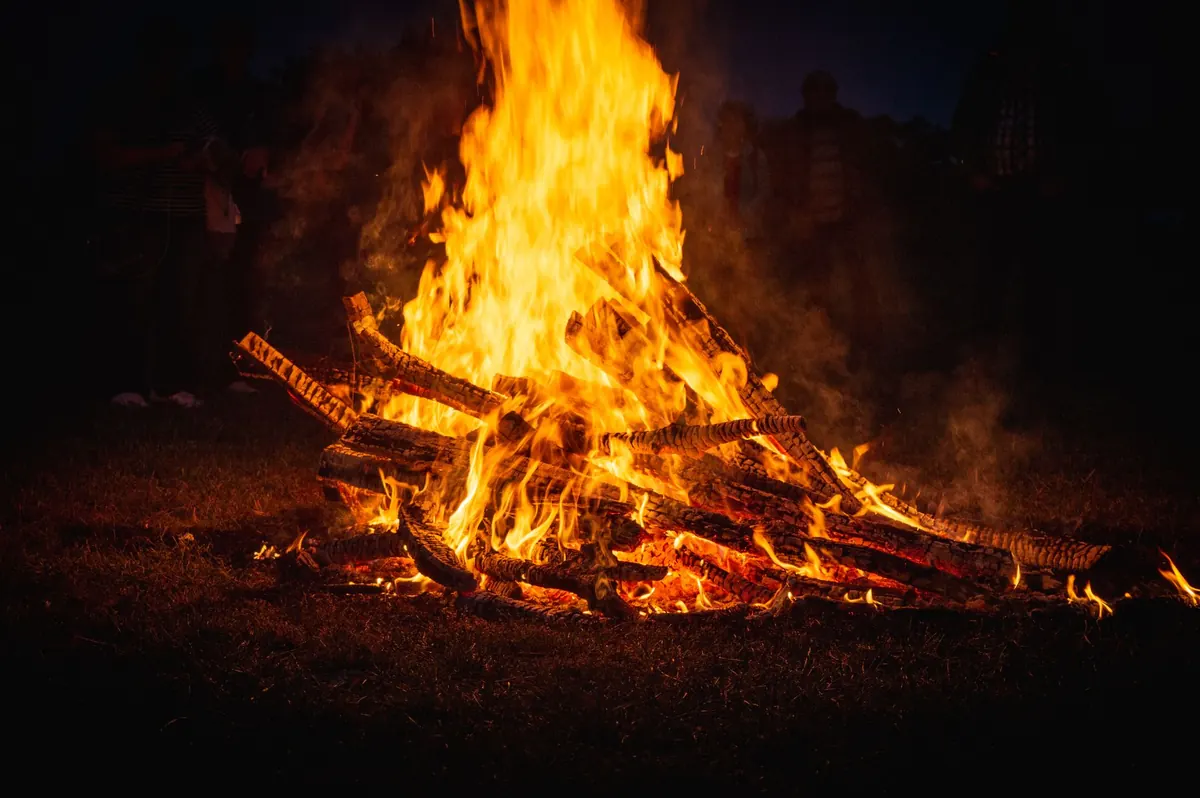
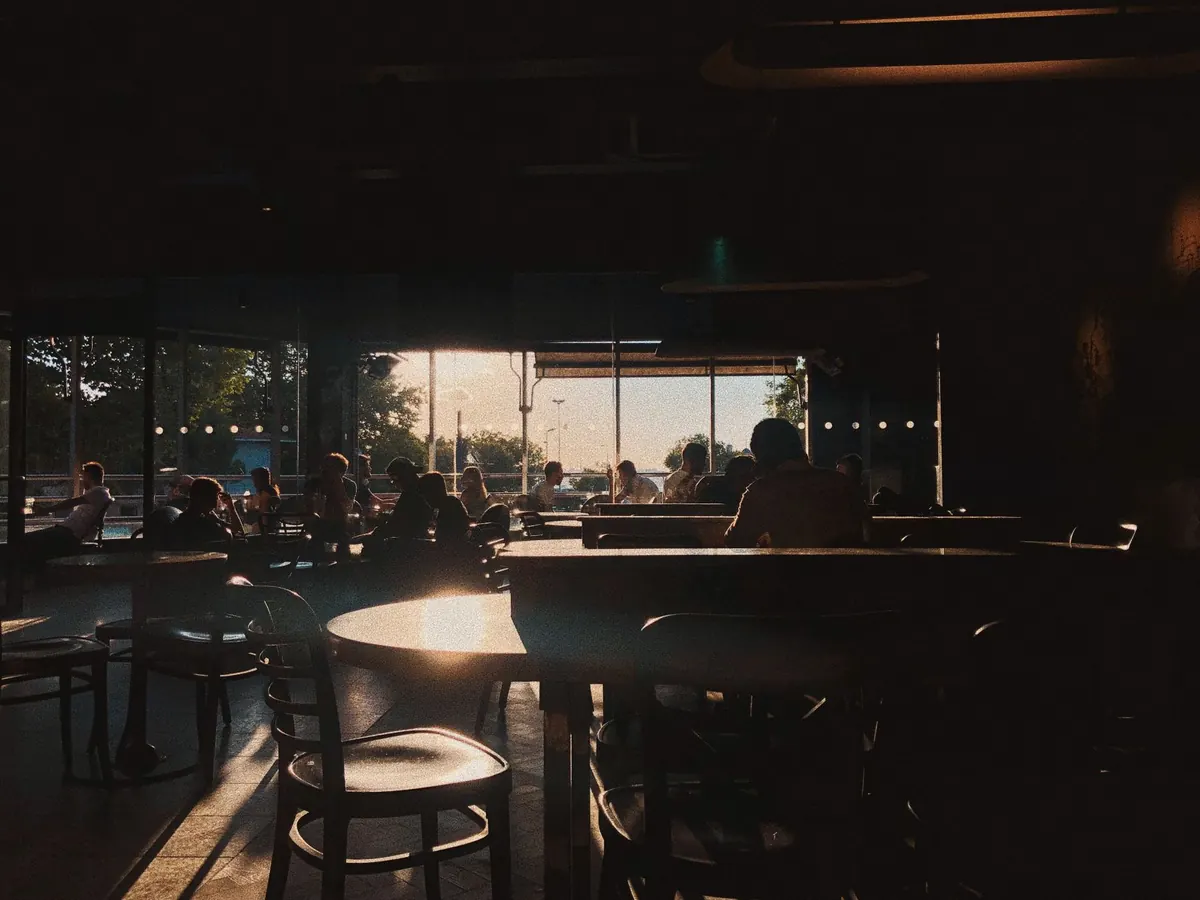


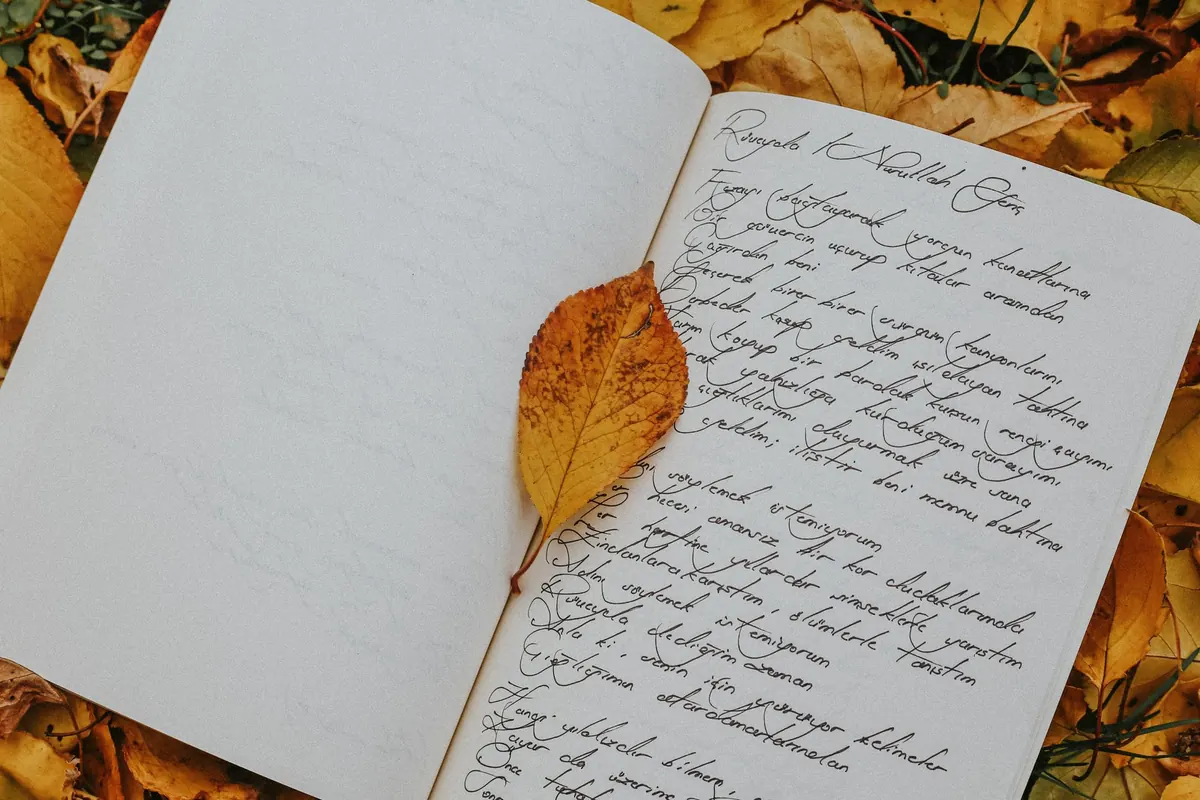
Autumn does much of the work for you. Light turns slanting and gold, evenings arrive early, and everyone drifts indoors. Mist softens a street until it looks like somewhere else entirely. One concrete detail — a wet gate, a kettle coming to the boil, the smell of a bonfire caught in a coat — carries more atmosphere than three paragraphs of description.
Here are thirty prompts built on that mood. They are starting points, not plots: take one as a first line, a premise, or a single image you build outwards from. Change the landscape, the era and the weather to suit your own story.
Mist, Fog and Things Half-Seen
Fog is a permission slip. It lets you hide something and reveal it at your own pace.
- The bus that never stops. A woman waits at a fog-blanketed stop. The fourth bus passes without slowing. Write the conversation she has with the only other person waiting.
- The dog comes back. It returns home wet and smelling of woodsmoke, three hours after the family buried it.
- Boundary hedge. Two neighbours meet there every morning, but only one of them casts a shadow in the mist.
- Inland logbook. A keeper records ships he can see from a lighthouse that was decommissioned in 1904 and is forty miles from the sea.
- The drawing. A child insists the fog has a shape and draws it daily for a fortnight. The drawings keep getting closer to the house.
- The shortcut. A cyclist crosses a water meadow and arrives in a village that was flooded and abandoned in 1953.
Harvest, Gluts and Quiet Jealousy
Abundance brings out the worst in people, which is useful. Ask what each character wants to keep, and who they are willing to disappoint.
- The stolen marrow. The prize exhibit vanishes the night before the village show. The thief is the judge's sister.
- Sealed jar. A woman preserves the last of the orchard fruit and finds a note inside a jar closed forty years earlier.
- The untended half. Two families share an allotment. One stops weeding in September and refuses to explain.
- Out of season. A farmer sells the field his grandfather planted. In October, its hedge fruits again.
- A taste of place. A baker's autumn loaves begin tasting of one specific churchyard, and customers notice.
- Gleaning. A child is sent to gather what the harvest left behind, and brings home something nobody dropped.
Fireside, Lamplight and the Indoors
Indoor scenes run on small power struggles: who sits nearest the heat, who lights the fire, who is allowed to leave.
- First fire. A house has been cold since a death in March. Someone lays and lights the grate.
- Power cut. Four flatmates, one candle, and a game they once agreed never to play again.
- Whittling lesson. A grandfather teaches his granddaughter to carve. The wood came from the tree that fell in the storm that killed her father.
- Curfew. Guests at a boarding house must be back before the lamps are lit. A new arrival is late.
- Each row a decision. Someone knits a jumper for a person who has stopped writing to them.
- The empty chair. A pub keeps one fireside seat permanently free. A regular finally sits in it.
Rain, Rot and Turning Weather
Decay is a plot engine. Something is already changing before your first sentence; your job is to find who notices.
- Eleven days of rain. A marriage measured by who volunteers to go out for bread.
- The damp patch. It spreads across the ceiling in the shape of a map of a childhood home — and it is still growing.
- Under the tiles. A roofer finds letters addressed to the same woman, none of them posted, all of them sealed.
- Flooded cellar. A rowing boat, knee-deep water, and half an hour to decide what is worth saving.
- Last warm day. Two people who have avoided each other since June end up on the same bench.
- The house's account. A gardener refuses to cut anything back, and the garden begins to take the indoors. Tell it from the house's point of view.
Local Rituals and Village Customs
Invented traditions do more work than real ones, because you decide the rules — and the consequences of breaking them.
- The effigy. A town burns a figure every autumn. This year, someone writes a real name on it.
- Place cards. A harvest supper seating plan is rearranged at the last minute, and three lives change before pudding.
- An old rule. An apple-wassail ceremony has one instruction nobody can explain. A newcomer ignores it.
- All Souls. A family sets an extra place at dinner. For the first time, someone takes it.
- Bell practice. On a foggy Tuesday, one bell in the tower rings a note that isn't in the frame.
- First frost. A pub bet has run since 1911. This year, the winner never comes to collect.
Turning a Prompt into a Finished Story
A prompt only becomes a story when someone wants something and something stands in the way. These six steps will get you from an image to a draft in an afternoon.
- Pick the image, not the idea. Choose the prompt that gives you a picture you can see — a lit window, a wet dog, a jar of pears. Images survive revision; clever concepts often don't.
- Give the season a job. Cold, darkness or harvest should complicate the plot, not decorate it. If the story would work identically in July, autumn is scenery.
- Start late. Open where something is already off balance. Let the fog, the frost or the first fire be the second thing the reader meets.
- Allow one strange detail. One impossible thing is unsettling. Three is a different genre. Choose your one and treat it as ordinary.
- Write to about 1,200 words, then cut the first paragraph. Most drafts begin a beat too early. Read what's left aloud and listen for the sentence where the story actually starts.
- Keep the unused prompts. Anything that didn't work this month may be exactly right in November. Note the image and move on.
Write one of these before the clocks change and you'll have a seasonal draft ready for the winter. Write four, and you'll have a themed collection — with a fire on the cover, presumably.
Photo: betül nur akyürek / Pexels
Related posts
More stories you’ll love reading